Daily Routine Labs: A Working Network for WordPress Professionals in the AI Era
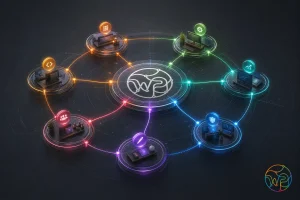
A network for WordPress professionals becomes useful when it helps people move from a real need to a clear next step. Daily Routine Labs is built around that practical idea. It brings WordPress developers, freelancers, agencies, plugin developers, WooCommerce specialists, designers, project managers, and product owners into a working environment where professional intent can be expressed in a structured way.
The system does not treat every interaction as the same kind of post. A request for a defined implementation, a search for a long-term collaborator, a team-building need, a product partnership, a project handoff, a trusted introduction, and an expert review each call for different information and different outcomes. Daily Routine Labs represents those differences through distinct dialogue types, structured responses, selection steps, and private conversations.
What Daily Routine Labs is
Daily Routine Labs is a working network for WordPress professionals. Its current platform combines public professional requests, structured applications or proposals, privacy-aware professional profiles, invitations, candidate review, access-controlled conversations, and collaboration workflows. The emphasis is not on accumulating posts or followers. It is on making the context of possible work legible enough for the right people to respond.
A member can describe a professional role, WordPress expertise, AI capabilities, availability, capacity, preferred work format, and selected profile visibility. The professional directory can be filtered by role, expertise, and availability. Interaction types then give that identity a practical context: a person is not simply “available,” but may be relevant to a specific Project Match, Expert Check, Team Up role, or another clearly defined request.
The result is closer to a shared working layer than a publishing feed. To see how those formats differ, read How to Choose the Right Dialogue Type for a WordPress Task.
How a working network differs from a forum
A forum is effective when the main goal is an open question and a body of public answers. That is valuable, but it does not automatically create a project brief, identify an accountable decision-maker, or define what should happen after someone responds.
Daily Routine Labs starts from professional intent. Project Match asks for the work, context, definition of done, required skills, expected scope, timing signals, and professional specialization. Expert Check asks what should be reviewed, the expected result, timeframe, and required expertise. Other dialogue types have their own structures. Responses are attached to that intent and can move into selection and a private workspace when the workflow calls for it.
The difference is not that public discussion has no value. It is that a working request needs enough boundaries to support a decision. A clear WordPress project brief lets a specialist decide whether to engage and lets the request owner compare responses on substance.
How it differs from a job board
A job board usually places many kinds of work into one vacancy format. That model is useful for employment or standardized contracts, but WordPress work often begins in more varied ways. A plugin author may need an architecture review rather than a hire. An agency may need to relay a project it cannot accept. A founder may need a product partner. Two professionals may need a trusted introduction with consent from both sides.
Daily Routine Labs currently distinguishes seven active formats: Project Match, Long Run, Team Up, Co-Build, Project Relay, Warm Intro, and Expert Check. Some invite structured applications; Team Up works through roles, invitations, and join requests; Warm Intro requires separate consent; Expert Check collects review approaches from specialists. The format follows the intended relationship instead of forcing every need into a vacancy.
This also changes what counts as a useful response. Volume alone is not the objective. A smaller number of replies that address availability, approach, experience, contribution, or review method can be more actionable than many generic expressions of interest.
How it differs from a social network
Conventional social networks organize attention through feeds, reactions, follower counts, and repeated visibility. Those signals may show reach, but they do not necessarily show fit for a particular WordPress problem. A highly visible profile can still be irrelevant to a WooCommerce checkout failure, a Gutenberg architecture review, or a long-running maintenance relationship.
Daily Routine Labs uses profile information as context, then asks for a response that relates to the work. In Project Match, for example, an application records when the specialist can begin, a current effort estimate, an approach, relevant experience, and an optional clarification. The owner can review candidates, shortlist them, mark a response as not a fit, open private dialogue where permitted, and select a specialist.
The network therefore centers professional relevance rather than popularity. Working identity can include self-described information, while the system separately recognizes outcomes that required confirmation from the participants. It does not turn those signals into a promise of future performance.
How it differs from a traditional WordPress community
The WordPress ecosystem already has mature communities for learning, contribution, events, support, and open-source coordination. Daily Routine Labs is not a replacement for them. Its narrower role is to support the moment when professional communication needs to become operational.
A community conversation may reveal that two people share an interest. A working network helps them state what they may do together, what information is still missing, and what decision should come next. It can support a concrete project, recurring work, a team, a partnership, a handoff, an introduction, or a review without claiming that all of those relationships are identical.
Why professional communication needs structure
WordPress projects combine content, code, hosting, third-party services, commercial constraints, and existing operational risk. A short request such as “fix my store” leaves essential questions unanswered. Is the issue reproducible? Does it involve checkout, taxes, subscriptions, a payment gateway, custom code, performance, or hosting? What is the desired result? What can be shared publicly, and what belongs in a private workspace?
Structure does not mean bureaucracy. It means collecting the minimum useful signals at the right stage. Public requests can avoid credentials and client secrets. Applications can focus on fit. Final scope can be aligned after selection. Private files can remain controlled. Outcome confirmation can happen only when participants are ready.
For a practical end-to-end view, see From Brief to Delivery: A Better Workflow for WordPress Collaboration.
Who the network is intended for
WordPress developers and freelancers
Independent professionals can describe their role, technical specializations, availability, and preferred interaction types. They can respond to work with context instead of sending a generic pitch. The system supports both focused project opportunities and longer working relationships.
WordPress agencies and product teams
Agencies can look for a specialist, form a team, seek an expert opinion, or hand off suitable work when capacity or fit changes. Product teams can define a concrete need without pretending that every need requires a permanent role.
Plugin developers and WooCommerce specialists
Specialist work benefits from precise context. A plugin architecture review, integration question, checkout issue, data migration, or performance plan can be framed around the relevant technical domain and the expected result. The network makes room for both implementation and review.
Professional work in the AI era
AI tools can accelerate drafting, coding, research, testing, and documentation. They can also produce plausible but context-poor output. As production becomes faster, professional value shifts toward problem framing, context management, technical judgment, verification, responsibility, and the ability to collaborate across roles.
That makes structured relationships more important, not less. A WordPress professional may use AI-assisted development while still needing another person to review architecture, protect client constraints, validate accessibility, or decide whether an automated change is appropriate for production. The platform lets members describe AI capabilities, but those capabilities sit beside WordPress expertise, availability, work format, and concrete responses.
Daily Routine Labs is designed around this transition. It gives professional communication a shape: choose the right kind of dialogue, explain the actual need, receive relevant responses, make an explicit selection where the workflow supports it, work privately, and confirm outcomes without turning the platform into a source of guaranteed claims.